You Don't Need a Craft Room: Building a Cricut Setup That Lives Where You Do

Photo: Mike Kirby, CC BY-SA 2.0, via Wikimedia Commons
Scroll through crafting Instagram long enough and you'll start to believe the lie: that every serious maker has a dedicated craft room with pegboard walls, a rainbow of vinyl on display, and a machine permanently parked on a gorgeous white desk.
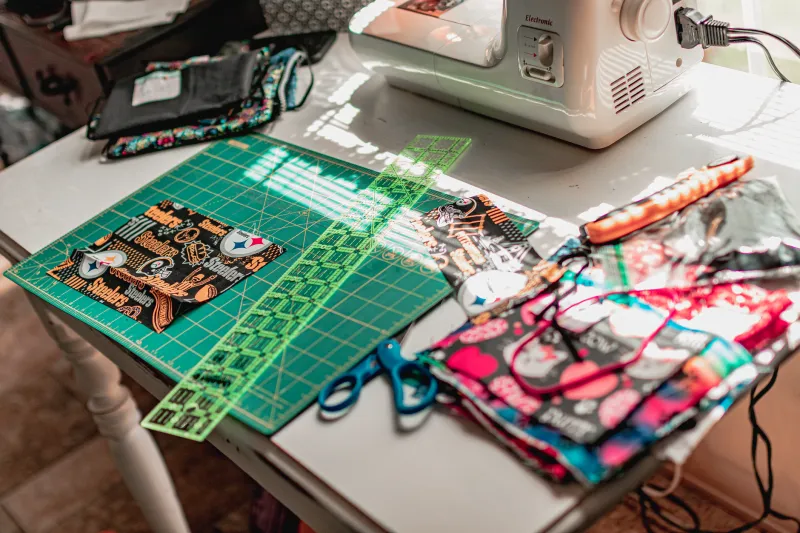
Reality check: most of us are cutting on the kitchen table. Or a corner of the living room. Or a desk that also handles homework, tax paperwork, and the family laptop. And that's fine — you don't need a craft room to make great things or run a real business. You need a system.
The Golden Rule of Small-Space Crafting
If you take one thing from this article, make it this: your workspace should be measured in minutes, not square feet.
The real enemy of the small-space maker isn't lack of room. It's friction. If setting up takes 25 minutes and cleanup takes another 20, you'll craft less. Every time. Guaranteed. The goal is a setup where you can go from "closed and stowed" to "actively cutting" in under five minutes — and back just as fast.
The Mobile Craft Cart: Your New Best Friend
If you craft in a shared space, a rolling cart is the single best investment you can make. The classic three-tier utility carts (you know the ones — they're at every big-box store in America) are practically designed for this.
A proven layout:
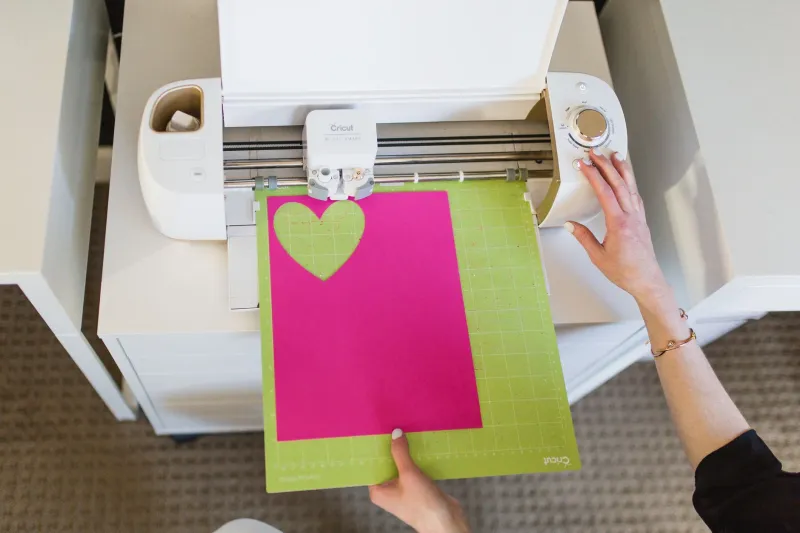
- Top tier: Your Cricut and a small cutting mat. This is the working surface.
- Middle tier: Everyday tools — weeding tools, scraper, scissors, blades, a small tray for pens.
- Bottom tier: Heavier storage — vinyl rolls in an upright holder, transfer tape, your scrap bin.
When you're done, the whole operation rolls into a closet, a corner, or behind the sofa. Your dining room table goes back to being, well, a dining room table.
Taming the Noise and the Smell
Shared-space crafters have two extra considerations: sound and air.
Noise. A Cricut isn't loud, but it's not quiet either — that rhythmic cutting sound carries, especially through apartment walls. If you're cutting early mornings or late evenings, a thick folding table absorbs vibration better than a hard dining surface, and a silicone mat underneath helps even more. Your downstairs neighbor will thank you.
Ventilation. If you work with Infusible Ink, adhesive vinyl, or especially anything involving spray adhesive or paint pens, airflow matters. In a small apartment, crack a window or set up near one. A small desk fan pointed outward does more than you'd think. And if you're using a heat press at home, do it in the most ventilated spot available — never a closed bedroom with the door shut.
Storage That Survives Real Life
Small-space storage lives or dies on one principle: everything needs a home it can return to in one motion.
- Vinyl: Upright storage, always. A file organizer box or a repurposed magazine holder keeps rolls from becoming a tangled, creased mess. Sort by material type first, color second.
- Tools: A utensil caddy or makeup organizer keeps weeding tools, scrapers, and tweezers portable. If it fits in the caddy, it travels with the cart.
- Mats: A pants hanger with clips, hung in a closet, is the internet's favorite mat storage hack — and honestly, it earns the hype. Mats stay flat, dust-free, and sticky-side protected.
- Works in progress: This is the one everybody forgets. Get a lidded box or a large zip pouch labeled "IN PROGRESS." Half-finished projects go in it, always. Nothing kills momentum like a project that's been disassembled across three surfaces.
Design for Start-Stop Crafting
Here's the truth about crafting around a full life: you will be interrupted. Kids, work calls, dinner, life. Design your workspace so interruption doesn't cost you the project.
That means keeping your Design Space files organized as you go (future-you will not remember what "Untitled 47" was), storing projects physically together in that in-progress box, and never leaving loose pieces on an open surface where a cat, a toddler, or a rogue glass of juice can find them.
The kitchen-table crafters who thrive aren't the ones with the most space. They're the ones whose setup respects how they actually live. Build for your real life, not the Pinterest version, and you'll make more than you ever thought you could in that little corner.