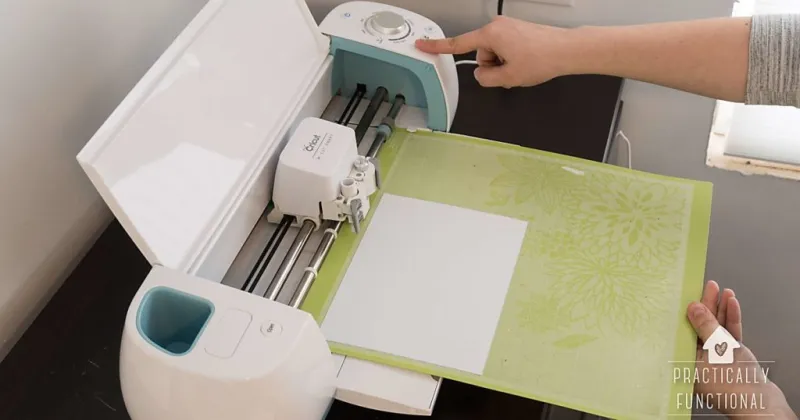
Why Your Cricut Project Goes Viral But Never Sells — And How to Fix That
Photo: Harris & Ewing, photographer, Public domain, via Wikimedia Commons
You spent two hours designing the perfect personalized tumbler. You posted it. The comments blew up. "Where can I buy this?!" flooded in. You set up your Etsy shop, listed it, promoted it — and sold three in two months.
Sound familiar? You're not alone. There's a painful gap between "people love this" and "people will pay for this," and it trips up talented makers constantly. The good news: that gap is closable, and it doesn't require a business degree or a giant advertising budget. It requires a smarter approach to how you move from inspiration to product.
Let's break it down.
The Viral Trap: Attention Isn't Demand
Here's the uncomfortable truth about social media traction — most of it is aspirational engagement. When someone saves your Stanley cup name plate design to their Pinterest board, they're filing it under "maybe someday" or "I wish I could make that." They are not reaching for their wallet.
Viral content performs well because it's visually satisfying, emotionally resonant, or on-trend. Products sell because they solve a problem, mark an occasion, or deliver something people can't easily replicate themselves at a price that feels worth it.
Those are two very different things, and conflating them is where most makers lose time and money.
Successful sellers on platforms like Etsy, Faire, and local markets consistently describe a similar realization: the projects that got the most compliments weren't always the ones that moved inventory. It was the practical stuff — the custom return address labels, the kids' name tags for back to school, the matching bridesmaids gift sets — that actually paid the bills.
What Actually Sells: The Four Pillars of Cricut Product Success
After talking to makers who've built real revenue streams with their Cricut businesses, a few consistent themes emerge. Products that convert tend to check most (if not all) of these boxes:
1. Occasion-Driven People spend money when there's a reason to. Birthdays, weddings, graduations, baby showers, holidays — these are the purchase triggers that drive consistent Cricut product sales. If your design doesn't attach naturally to an occasion or milestone, you're selling into a tougher market.
2. Personalization Potential Customization is one of the biggest competitive advantages Cricut makers have over mass-market retailers. Products that offer a name, date, or personal message feel special in a way a Target shelf item never can. If your product can be personalized without dramatically increasing your production time, that's a strong signal.
3. Giftability Ask yourself: would someone buy this for someone else? Gift items have a built-in purchase motivation that personal-use products often lack. Tumblers, ornaments, keychains, tote bags, wine bags — these are classic Cricut bestsellers partly because they're so easy to give.
4. Clear Value Gap Your product needs to feel worth more than what someone could get at a big box store — either because of quality, personalization, or uniqueness. If a customer can buy something similar for $8 at Walmart, your $22 handmade version needs to justify that difference clearly and immediately.
How to Validate Before You Invest
One of the biggest mistakes new maker-sellers make is producing inventory before validating demand. Don't make 50 sets of holiday ornaments hoping they'll sell — test first.
The Pre-Sell Method List the product in your shop or social media before you've made a full batch. Use a photo of a single prototype or mockup. If you get inquiries or orders, fulfill them and then scale. If crickets, you've saved yourself hours of production time and a pile of unsold inventory.
The $5 Ad Test Run a small paid post on Facebook or Instagram targeting your ideal buyer (say, moms aged 25–45 in the US interested in personalized gifts) for $5/day over 5 days. Track how many people click through to your listing versus how many actually purchase. A click-through rate above 2% is a good signal. Actual sales from that small spend? That's a green light to invest more.
Read the Search Data Etsy's search bar is a goldmine. Start typing a product idea and see what autocompletes. Those suggestions are based on real searches from real buyers. If "custom name tumbler" autocompletes with five variations, people are actively looking. If your niche idea doesn't show up at all, that's worth noting.
Google Trends is another underused tool — it's free and shows you whether interest in a particular search term is growing, declining, or seasonal. A trending topic that's still climbing is a better bet than one that peaked six months ago.
Pricing for Profit, Not Just Compliments
Let's have the pricing talk because this is where so many talented makers undercut themselves into burnout.
A simple starting framework:
Materials + (Hourly Rate × Time) + Platform Fees + Profit Margin = Selling Price
If your materials cost $4.50, you value your time at $15/hour, the project takes 30 minutes, your Etsy fees run about $1.50, and you want a 30% profit margin — your price shouldn't be $12. It should be closer to $22–$25.
Here's the thing: buyers who want cheap will always find cheap. You are not competing with Alibaba. You're competing on quality, personalization, and the human touch behind your work. Price accordingly, and attract the customers who actually value that.
Makers who've scaled successfully often say their biggest revenue jump came not from selling more units at low prices, but from raising prices and attracting buyers who didn't haggle or request excessive revisions.
Turning a Trend Into a Scalable Product Line
When a design or style does start selling, the next challenge is scaling it without burning out. A few strategies that work:
Batch Production Set aside dedicated production days rather than making items one at a time per order. Cut 20 blanks at once, weed 20 at once, press 20 at once. The time savings compound quickly.
Create Design Variations, Not Entirely New Products If a floral name tumbler sells well, don't reinvent the wheel — offer it in different color schemes, different font styles, or for different occasions (birthday version, bridesmaid version, teacher appreciation version). You're leveraging the same production setup with minimal additional design work.
Systematize Your Bestsellers Document your exact settings, materials, and steps for each product that sells consistently. When you're tired, rushed, or training someone to help you, that documentation is priceless.
Knowing When to Let a Trend Go
Not every viral moment is a business opportunity. Some trends are too saturated by the time you notice them. Some have a shelf life of six weeks. Some require a level of customization that makes them unprofitable at any reasonable price point.
The skill isn't just identifying what to pursue — it's knowing what to walk away from. If a design requires 90 minutes of intricate weeding for a product you can only reasonably charge $18 for, that's not a business. That's a very expensive hobby.
Protect your time. Validate before you invest. Price for real profit. And when something hits — scale it smart.
Your Cricut is a tool. The real product is your judgment about what to make with it.