Your Scrap Bin Is a Product Line Waiting to Happen
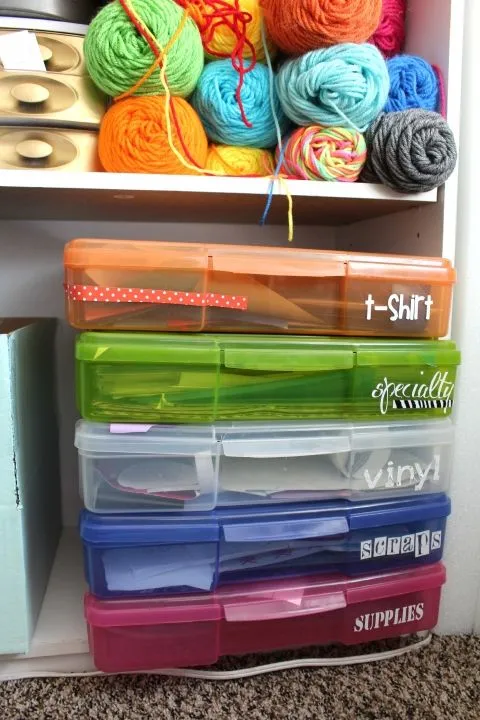
Photo: colorful vinyl scraps in craft room storage bin, via i.pinimg.com
Every Cricut maker has one. That drawer, bin, or (let's be honest) grocery bag stuffed with vinyl scraps, Infusible Ink offcuts, and the sad remains of test cuts that didn't quite work out. Most of us treat it like a landfill. But here's a thought: the most profitable product in some makers' shops costs them almost nothing to produce, because it comes entirely from that bin.
Think of your scraps like a sourdough starter. You feed it a little every time you cut a project, and in return, it keeps producing. If you're not feeding your scrap bin strategically — and harvesting it on purpose — you're leaving real money on the table.
First, Figure Out What Your Scraps Are Actually Worth
Before you can profit from scraps, you need to know their value. The math is simpler than you'd think.
Take a standard 12x12 sheet of permanent vinyl, say a $3 roll. When you cut a large design, you're not using the whole sheet — you're using maybe 40-60% of it. That means every big project quietly generates $1.20 to $1.80 in leftover material.
Here's the framework: divide the sheet's cost by its usable square inches, then multiply by the square inches of your largest scrap piece.
A 12x12 sheet is 144 square inches. At $3 per sheet, that's about 2 cents per square inch. A 6x6 leftover piece? That's roughly 72 cents of material you've already paid for. A 4x6 chunk is about 48 cents.
Do this across a month of crafting and you'll be genuinely surprised. Many makers sitting on $30-50 of usable material at any given time — already purchased, already paid for, currently doing absolutely nothing.
The Micro-Products That Eat Scraps for Breakfast
Not every project works as a scrap project. The sweet spot is anything that needs a small cut, sells at a healthy markup, and doesn't require matching materials.
Keychains and bag tags. A 2x3 inch cut uses pennies of vinyl. Add a $0.30 acrylic blank and a split ring, and you've got a $6-8 product with materials costs under a dollar — most of which was scrap.
Gift tags. especially around the holidays, personalized tags sell like crazy on Etsy and at craft fairs. A single 6x6 scrap can produce eight to ten tags.
Earbud and cord organizers. Small, simple, endlessly useful. These are the kind of impulse add-on item that bumps up an Etsy order value without any extra marketing effort.
Mini decals. Laptop decals, phone decals, water bottle monograms. If your scrap is big enough for weeding, it's big enough to sell.
Infusible Ink test tiles and coasters. Those offcuts from transfer sheets are perfect for coaster-sized projects, and Infusible Ink scraps in trendy patterns often outperform solid colors.
Real Makers, Real Results
This isn't just theory. Browse enough craft fair booths and Etsy shops and you'll spot the pattern: the makers with a "$5 and under" section are almost always running a scrap strategy, whether they name it that or not.
One Midwest maker we spoke with built her entire best-seller — personalized keychains for teachers, nurses, and sports teams — out of what used to be her garbage. Her material cost per unit dropped so low that she could afford craft fair booth fees and still clear 80% margins. Another maker in Arizona turns her Infusible Ink leftovers into mismatched coaster sets marketed as "perfectly imperfect," and they routinely sell out before her main product line does.
The common thread? They stopped thinking of scraps as waste and started treating them like a second inventory stream.
Make It a System, Not a Maybe
A scrap strategy only works if it's a habit. Three rules to live by:
Rule 1: Never throw a scrap bigger than 3x3 inches. Anything smaller goes in a second bin for test cuts and practice weeding.
Rule 2: Store scraps by material and color, flat. A simple accordion file or photo storage case works great. Scraps you can't find are scraps you don't have.
Rule 3: Schedule a "scrap harvest" once a month. One afternoon, turn the bin into finished micro-products. Batch it, photograph it, list it.
The beauty of this approach is that it compounds. Your main products fund the materials; your scraps fund the profit. And when a slow sales month hits, that scrap-derived product line can be the thing that keeps your shop numbers from flatlining.
Your scrap bin has been sitting there quietly the whole time. Maybe it's time to open it and see what's actually in there.